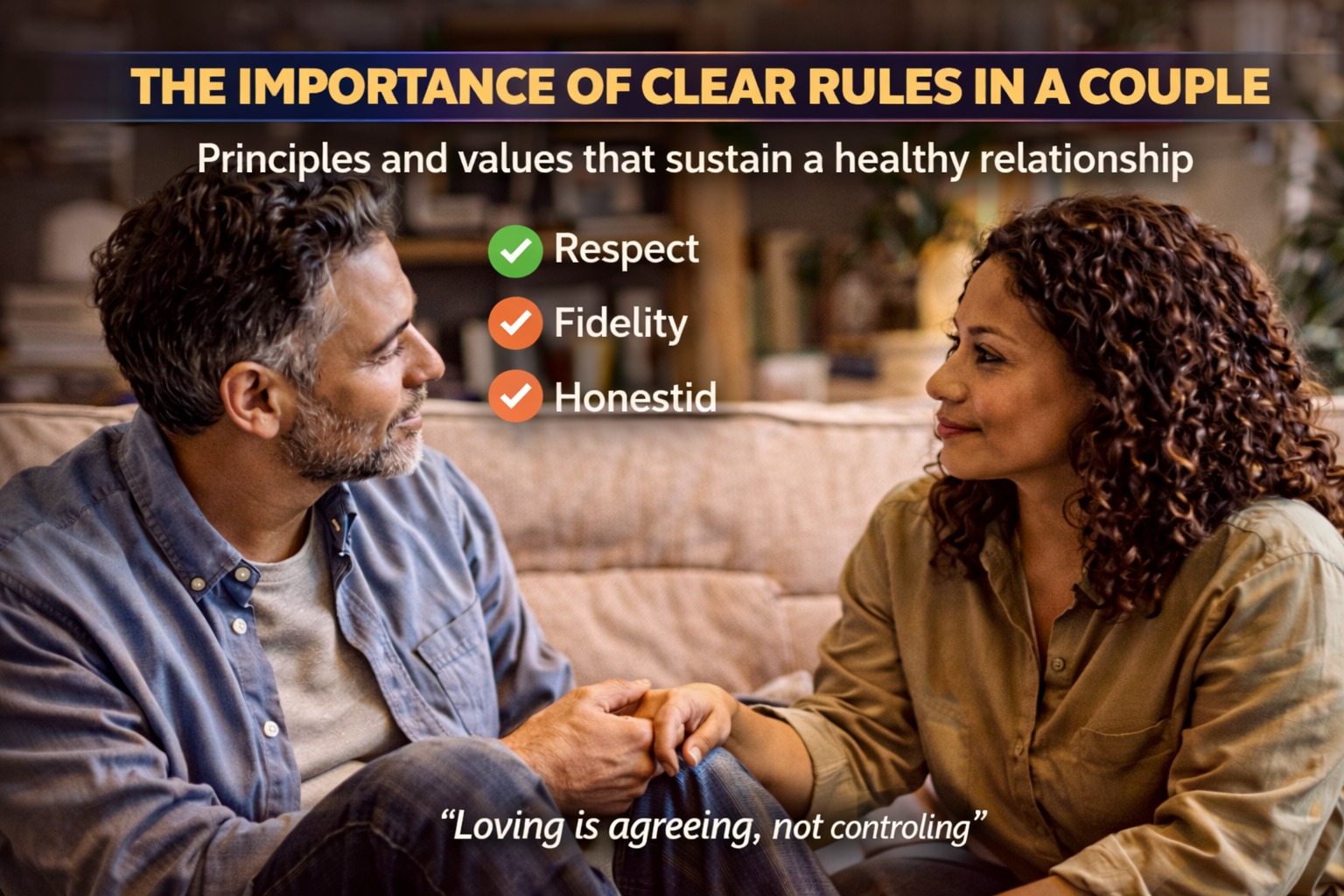
Communication is one of the fundamental pillars of a healthy romantic relationship. It is not only about talking, but about how we speak, when we speak, and from what emotional place we communicate. Many couple crises do not stem from a lack of love, but rather from misunderstandings, prolonged silence, poorly managed words, or emotions that are not properly expressed.
In this article, we share practical and applicable tips to improve communication in couples, strengthen emotional bonds, and prevent conflicts that, over time, can deteriorate the relationship. As we always say: a relationship can always be restored, no matter how complex the situation may seem.
1. Truly Listening, Not Just Hearing
One of the most common mistakes in couple communication is listening in order to respond, rather than to understand. Active listening involves giving full attention, without interrupting, judging, or mentally preparing a defense.
Practical tip: when your partner is speaking, maintain eye contact, avoid using your phone, and validate what you hear with phrases such as u201cI understand how you feelu201d or u201cWhat youu2019re saying is important to me.u201d
2. Speak from the u201cI,u201d Not from Blame
The way disagreements are expressed makes the difference between constructive dialogue and destructive conflict. Accusatory statements tend to generate defensiveness and shut down communication.
Example:
u274c u201cYou never listen to me.u201d
u2705 u201cI feel ignored when I try to talk and donu2019t receive attention.u201d
This shift reduces confrontation and opens space for understanding.
3. Choose the Right Time to Talk
Not every moment is appropriate to address sensitive topics. Conversations held in the midst of fatigue, stress, or anger often escalate conflicts.
Practical tip: agree on specific times to talk, when both partners are calm and emotionally available. Communication also requires planning.
4. Validate Emotions, Even When You Disagree
Validation does not mean agreement, but rather recognizing that the other personu2019s feelings are real and legitimate. Ignoring or minimizing emotions weakens trust and creates emotional distance.
Key phrase: u201cI may not see the situation the same way, but I understand that this affects you.u201d
5. Avoid Prolonged Silence as Punishment
Silence can be helpful to calm down, but when it becomes a form of emotional punishment, it deeply harms the relationship. Sustained lack of communication generates resentment and insecurity.
Recommendation: if you need space, express it clearly and commit to resuming the conversation.
6. Practice Empathy and Compassion
Empathy allows us to put ourselves in the other personu2019s place and understand their emotional perspective. In a healthy relationship, both partners strive to understand before demanding to be understood.
Simple exercise: ask yourself, u201cHow would my partner feel if I were in their place?u201d
7. Acknowledge Mistakes and Apologize
Taking responsibility strengthens the relationship. Offering a sincere apology does not weaken you; it demonstrates emotional maturity and commitment.
An effective apology includes: acknowledging the mistake, empathizing with the harm caused, and showing willingness to change.
8. Take Care of Verbal and Nonverbal Language
Tone of voice, gestures, and body posture communicate just as much as words. A well-intentioned message can be lost if expressed with sarcasm, yelling, or contempt.
Key point: speak with respect even in disagreement.
9. Foster Positive Dialogue Spaces
Not all communication should focus on problems. Sharing achievements, gratitude, dreams, and daily moments strengthens the bond and creates a positive emotional climate.
Practical tip: dedicate a few minutes each day to talk about something positive, without addressing conflicts.
10. Seek Help When Communication Breaks Down
Seeking professional support is not a failure, but a responsible decision. Psychological counseling or couple-strengthening support can provide effective tools to improve communication and restore the relationship.
Conclusion
Communication in couples is a skill that is learned, practiced, and strengthened over time. Investing in healthy communication not only improves the relationship, but also positively impacts emotional stability at home and, when there are children, their psychological well-being.
At the National Family Strengthening Network u2013 USA (NFSN-USA), we believe that strengthening couple communication is a key preventive strategy for building healthier, more resilient, and more functional families.